Bluetooth Hearing Aid Technology: How It Works and What to Know

Affiliate disclosure: Some links on this page are affiliate links. If you buy through them we earn a small commission at no extra cost to you. Recommendations are research-driven; we don't claim personal use of every product reviewed. Product prices and availability are accurate as of the date published and are subject to change. Always check Amazon for current pricing before purchasing. Learn more.
Important:licensed audiologist or hearing healthcare professional
Quick Picks
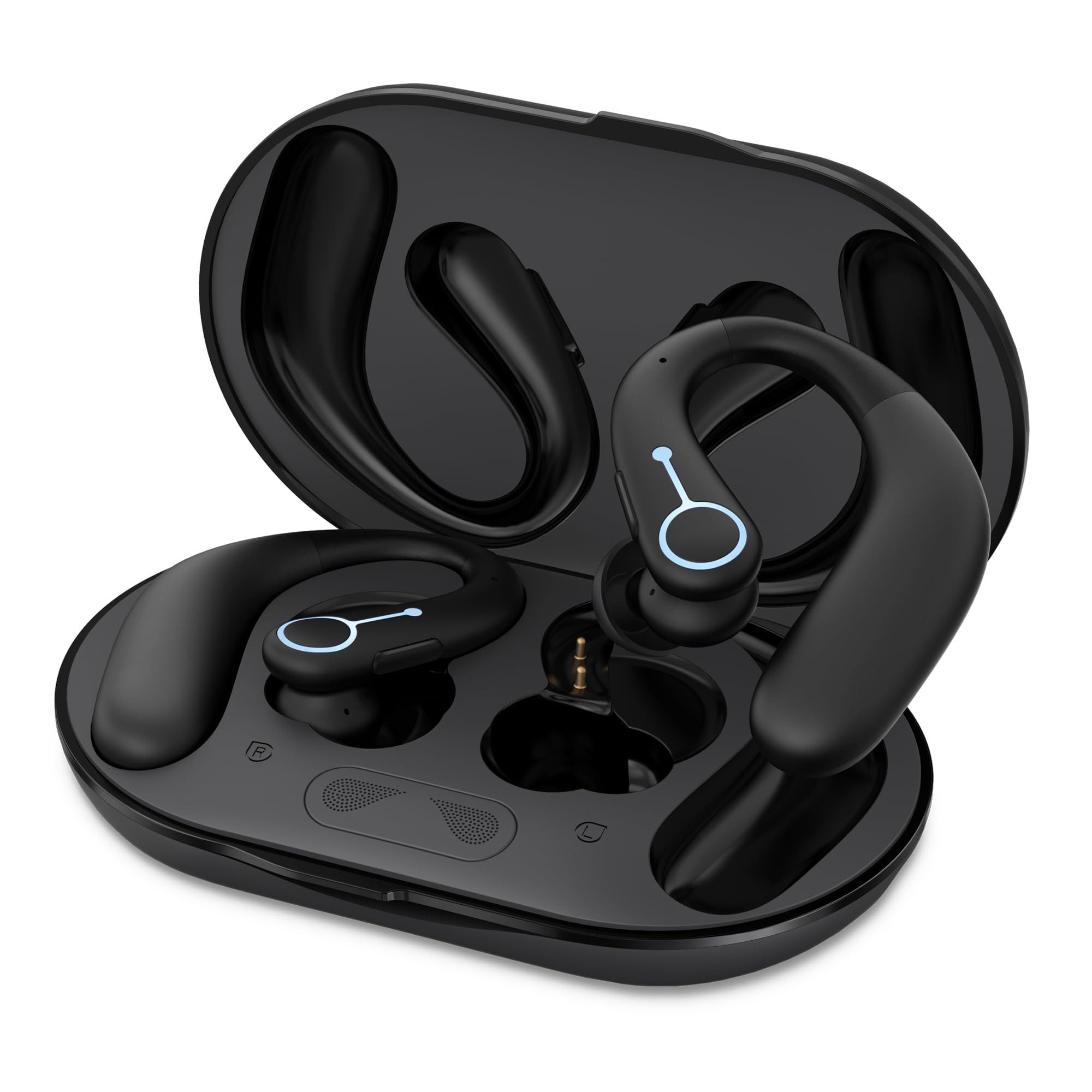
Generic OTC WASOCA Hearing Aids for Seniors, Hearing Aids Rechargeable with Bluetooth, Hearing Aid APP Control, Hearing Amplifier for the Hearing Loss, Hearing Your Voice
Built-in rechargeable battery eliminates the need for regular disposable battery purchases
Buy on AmazonBluetooth hearing aid technology has changed what people reasonably expect from a hearing device. Streaming phone calls, adjusting volume through a smartphone app, and connecting directly to a television are no longer features reserved for top-tier prescription models. They are increasingly available across a wide range of devices, including over-the-counter options.
Choosing among those options is genuinely complicated. This resource covers how Bluetooth hearing aids work, what separates capable devices from disappointing ones, and what one specific OTC option offers buyers who are exploring this space for the first time.
What Bluetooth Hearing Aids Actually Do
Most people hear “Bluetooth hearing aid” and picture streaming audio from a phone. That is accurate, but it is only part of the picture. Bluetooth hearing aids use short-range wireless radio signals to connect with external devices, most commonly smartphones, tablets, and televisions. Once connected, they can receive audio directly into the hearing aid, bypass the microphone entirely for calls and media, and in many cases accept remote adjustments through a companion app.
For a fuller overview of what is available in this category, the Bluetooth Hearing Aids hub covers the landscape from basic paired devices to Made for iPhone and Android-compatible models with clinical-grade features.
Streaming vs. App Control: Two Distinct Functions
It is worth separating two things that often get grouped together. Streaming refers to audio delivery, meaning sound traveling wirelessly from a source device into the hearing aid. App control refers to adjustments, meaning volume, program switching, and sometimes equalizer settings managed through a phone rather than a physical button on the device.
Some hearing aids offer streaming without an app. Some offer an app without true audio streaming. The most useful devices offer both, though the quality of implementation varies significantly across brands and price points. Buyers should confirm which function a device actually supports before purchasing, since marketing language sometimes uses “Bluetooth” loosely to describe either capability.
How Bluetooth Connectivity Has Expanded Access
For many years, Bluetooth connectivity in hearing aids was limited to premium prescription devices, often requiring a separate intermediary streamer worn around the neck. That changed in meaningful ways after 2019, when both chipset miniaturization and the FDA’s eventual OTC framework made it more practical for manufacturers to build direct wireless connectivity into smaller, lower-cost form factors.
Audiologists writing in The Hearing Journal have noted that direct-to-device Bluetooth, without an intermediary accessory, significantly improves user adoption because the setup is simpler and the daily workflow is more like using consumer earbuds. Older adults in particular, who may have found the older neck-loop systems awkward, often respond better to devices that behave like familiar consumer electronics.
Understanding OTC Bluetooth Hearing Aids
The FDA’s 2022 ruling establishing the over-the-counter hearing aid category was significant for buyers with mild-to-moderate hearing loss. It allowed manufacturers to sell hearing aids directly to consumers without requiring a prescription or a fitting appointment. Bluetooth-enabled OTC hearing aids have been among the fastest-growing product segments since that ruling.
The tradeoffs are real, however. OTC devices are self-fit, meaning the user adjusts them based on their own perception rather than an audiologist’s testing. For someone with mild loss who mainly struggles in noisy restaurants or on phone calls, an OTC Bluetooth device may be entirely sufficient. For someone with moderate-to-severe loss, or with hearing loss that has an asymmetrical or complex audiogram profile, OTC devices often fall short. That gap is worth understanding before purchasing.
Hearing Tracker forum discussions consistently show that buyers who have the most success with OTC Bluetooth devices are those with previously documented mild-to-moderate loss, realistic expectations about background noise performance, and the patience to spend time with the app adjustments during the first few weeks of use.
Top Picks
WASOCA Hearing Aids for Seniors, Hearing Aids Rechargeable with Bluetooth, Hearing Aid APP Control, Hearing Amplifier for the Hearing Loss, Hearing Your Voice
The WASOCA Hearing Aids for Seniors represent the budget-accessible end of the Bluetooth OTC hearing aid category. The device offers two functions that often matter most to first-time buyers: app-based control and a rechargeable battery. Those two features alone address the two complaints that come up most often among new hearing aid users, which are the frustration of fiddling with tiny physical buttons and the recurring cost and inconvenience of disposable batteries.
The rechargeable battery is worth discussing in some detail. Verified buyer reviews on Amazon indicate that overnight charging is sufficient to support a full day of typical use for most buyers. That pattern matches what the manufacturer documentation describes. For someone like my mother Ruth, who has used both a prescription Phonak and an OTC backup Jabra, the shift away from disposable batteries was one of the most consistently appreciated changes in her device experience. The WASOCA follows that same rechargeable approach.
The app control feature allows users to adjust volume and, depending on firmware, switch between listening programs suited to different environments. Owner reviews on Hearing Tracker and Amazon suggest the app functions reasonably well for basic adjustments, though buyers expecting the depth of control found in premium prescription apps may find the feature set limited by comparison.
The primary limitation worth flagging is the one inherent to any rechargeable design: the device requires access to a charger. For buyers who travel frequently, spend time in locations without reliable power access, or simply want the flexibility that replaceable batteries provide, this is a genuine constraint rather than a minor inconvenience. Extended travel without a charging cable means a non-functional hearing aid, which is a meaningful risk for buyers who depend on their device throughout the day.
The WASOCA is positioned in the budget category. For buyers with mild hearing loss who are testing Bluetooth OTC hearing aids for the first time and want to avoid a significant financial commitment, the device offers a reasonable entry point. Buyers with moderate-to-severe loss, or those who need reliable performance in high-noise environments, should evaluate higher-tier options before committing.
Check current price on Amazon.
Buying Guide: Evaluating Bluetooth Hearing Aids
Matching Device Features to Actual Use Cases
The most useful starting point is not a specification sheet. It is a list of the specific listening situations that cause the most difficulty. Common examples include understanding speech in crowded restaurants, hearing clearly on phone calls, following television dialogue, and understanding grandchildren with higher-pitched voices. Different Bluetooth hearing aid features address different problems, and a device with strong streaming performance may have mediocre background noise processing, or vice versa.
Buyers who primarily want better phone call audio should prioritize devices with direct Bluetooth streaming and a stable app connection. Buyers whose main difficulty is background noise benefit more from devices with directional microphone technology, which is often a separate feature from Bluetooth entirely. The Bluetooth hearing aids category page outlines how these features typically combine across device tiers.
OTC vs. Prescription: Knowing Which Path Applies
The OTC category legally covers mild-to-moderate hearing loss in adults 18 and older. If a buyer has had a recent hearing test and the results show loss in that range, OTC Bluetooth devices are a legally appropriate and often practical option. If no recent hearing test exists, or if a buyer suspects more significant loss, seeing an audiologist before purchasing any device is genuinely worthwhile.
Audiologists writing in The Hearing Journal have consistently noted that self-fitting works best when users have some baseline audiometric reference, even if only from a free online screening. Without that reference, app-based adjustments are essentially guesswork. The money saved on an OTC device can be quickly offset by the frustration of an improperly fitted one.
Battery Type and Daily Management
Rechargeable and disposable battery models each have meaningful tradeoffs. Rechargeable hearing aids eliminate the recurring cost and fine-motor challenge of swapping size 312 or size 10 batteries, which are small enough that many older adults find them difficult to handle. Overnight charging is convenient and works well in stable home routines.
Disposable battery devices offer flexibility that rechargeable models cannot match. A spare pack of batteries weighs almost nothing and can be purchased at most pharmacies. For buyers who travel frequently, live in rural areas with unreliable power, or simply prefer not to depend on a charging cable, disposable options preserve that autonomy. Neither type is universally better; the right choice depends on daily routine.
App Quality and Long-Term Usability
The companion app is not an afterthought in Bluetooth hearing aids. It is often the primary interface for adjustments, program switching, and volume control. App quality varies considerably, and owner feedback on Hearing Tracker forums frequently identifies poor app performance as a top complaint even with otherwise acceptable devices.
Before purchasing, it is worth confirming whether the app is compatible with the buyer’s specific phone model and operating system version. Older Android phones in particular sometimes have compatibility gaps with hearing aid apps. Verified buyer reviews are a useful source here; patterns of “app crashes on my phone” or “couldn’t get it to pair” are meaningful signals that go beyond individual user error.
Realistic Expectations for Budget Bluetooth Devices
Budget Bluetooth hearing aids can provide real benefit for the right buyer. The honest framing, supported by owner reviews across platforms including Amazon and Hearing Tracker, is that budget devices tend to perform adequately in quiet environments and one-on-one conversation, and noticeably less well in complex acoustic environments like restaurants, parties, or outdoor events with competing sounds.
For a buyer testing hearing aids for the first time after years of untreated mild loss, even a budget device can produce a meaningful improvement in daily communication. For a buyer who has worn prescription aids and is evaluating a budget OTC device as a backup or travel option, the performance gap will likely be perceptible.
Frequently Asked Questions
What does “Bluetooth” actually mean on a hearing aid?
Bluetooth on a hearing aid refers to a wireless radio connection between the device and a smartphone, tablet, television, or other compatible source. Depending on the model, this connection enables direct audio streaming, app-based volume and program adjustments, or both. Not all Bluetooth-labeled hearing aids support both functions equally well, and buyers should confirm which capabilities a specific device includes before purchasing.
Can I use a Bluetooth hearing aid without a smartphone?
Some Bluetooth hearing aids can function without a paired smartphone, relying on physical buttons for basic adjustments. However, most of the app-based features, including fine-tuning, program switching, and volume control beyond basic levels, require a connected phone. Buyers who do not own a smartphone or prefer not to use one should verify whether a device offers adequate on-device controls independently of the app.
Are OTC Bluetooth hearing aids appropriate for severe hearing loss?
OTC hearing aids, including Bluetooth models, are legally and clinically intended for mild-to-moderate hearing loss in adults. Buyers with moderate-to-severe or severe loss typically require a prescription device fitted by an audiologist to achieve adequate amplification and sound shaping. Using an underpowered device for more significant loss can create frustration and may delay appropriate treatment, which is a real concern worth discussing with a hearing care provider.
How long does the battery last on a rechargeable Bluetooth hearing aid?
Rechargeable Bluetooth hearing aids generally provide a full day of use from an overnight charge under typical conditions, though battery life can be shorter with heavy streaming use or in very cold temperatures. Manufacturer documentation for most devices in this category describes charge cycles in the range of 16 to 24 hours. Buyers who stream audio extensively throughout the day should look for devices that specify extended battery life or support mid-day charging without a full reset.
What should I do if the hearing aid app won’t pair with my phone?
App pairing failures are among the most commonly reported issues in owner reviews of Bluetooth hearing aids. The first steps are confirming that the phone’s Bluetooth is enabled, that the hearing aid is fully charged and in pairing mode, and that the app is updated to its current version. Compatibility issues between certain Android phone models and hearing aid apps are well-documented in Hearing Tracker forum discussions, and contacting the manufacturer’s support line directly is often more productive than troubleshooting independently.
<script type="application/ld+json">
{
 "@context": "https://schema.org",
 "@type": "FAQPage",
 "mainEntity": [
 {
 "@type": "Question",
 "name": "What does 'Bluetooth' actually mean on a hearing aid?",
 "acceptedAnswer": {
 "@type": "Answer",
 "text": "Bluetooth on a hearing aid refers to a wireless radio connection between the device and a smartphone, tablet, television, or other compatible source. Depending on the model, this connection enables direct audio streaming, app-based volume and program adjustments, or both. Not all Bluetooth-labeled hearing aids support both functions equally well, and buyers should confirm which capabilities a specific device includes before purchasing."
 }
 },
 {
 "@type": "Question",
 "name": "Can I use a Bluetooth hearing aid without a smartphone?",
 "acceptedAnswer": {
 "@type": "Answer",
 "text": "Some Bluetooth hearing aids can function without a paired smartphone, relying on physical buttons for basic adjustments. However, most of the app-based features, including fine-tuning, program switching, and volume control beyond basic levels, require a connected phone. Buyers who do not own a smartphone or prefer not to use one should verify whether a device offers adequate on-device controls independently of the app."
 }
 },
 {
 "@type": "Question",
 "name": "Are OTC Bluetooth hearing aids appropriate for severe hearing loss?",
 "acceptedAnswer": {
 "@type": "Answer",
 "text": "OTC hearing aids, including Bluetooth models, are legally and clinically intended for mild-to-moderate hearing loss in adults. Buyers with moderate-to-severe or severe loss typically require a prescription device fitted by an audiologist to achieve adequate amplification and sound shaping. Using an underpowered device for more significant loss can create frustration and may delay appropriate treatment, which is a real concern worth discussing with a hearing care provider."
 }
 },
 {
 "@type": "Question",
 "name": "How long does the battery last on a rechargeable Bluetooth hearing aid?",
 "acceptedAnswer": {
 "@type": "Answer",
 "text": "Rechargeable Bluetooth hearing aids generally provide a full day of use from an overnight charge under typical conditions, though battery life can be shorter with heavy streaming use or in very cold temperatures. Manufacturer documentation for most devices in this category describes charge cycles in the range of 16 to 24 hours. Buyers who stream audio extensively throughout the day should look for devices that specify extended battery life or support mid-day charging without a full reset."
 }
 },
 {
 "@type": "Question",
 "name": "What should I do if the hearing aid app won't pair with my phone?",
 "acceptedAnswer": {
 "@type": "Answer",
 "text": "App pairing failures are among the most commonly reported issues in owner reviews of Bluetooth hearing aids. The first steps are confirming that the phone's Bluetooth is enabled, that the hearing aid is fully charged and in pairing mode, and that the app is updated to its current version. Compatibility issues between certain Android phone models and hearing aid apps are well-documented in Hearing Tracker forum discussions, and contacting the manufacturer's support line directly is often more productive than troubleshooting independently."
 }
 }
 ]
}
</script>Where to Buy
Generic OTC WASOCA Hearing Aids for Seniors, Hearing Aids Rechargeable with Bluetooth, Hearing Aid APP Control, Hearing Amplifier for the Hearing Loss, Hearing Your VoiceSee WASOCA Hearing Aids for Seniors, Hear… on Amazon