Rechargeable Hearing Aids: Benefits and Considerations

Affiliate disclosure: Some links on this page are affiliate links. If you buy through them we earn a small commission at no extra cost to you. Recommendations are research-driven; we don't claim personal use of every product reviewed. Product prices and availability are accurate as of the date published and are subject to change. Always check Amazon for current pricing before purchasing. Learn more.
Important:licensed audiologist or hearing healthcare professional

Quick Picks
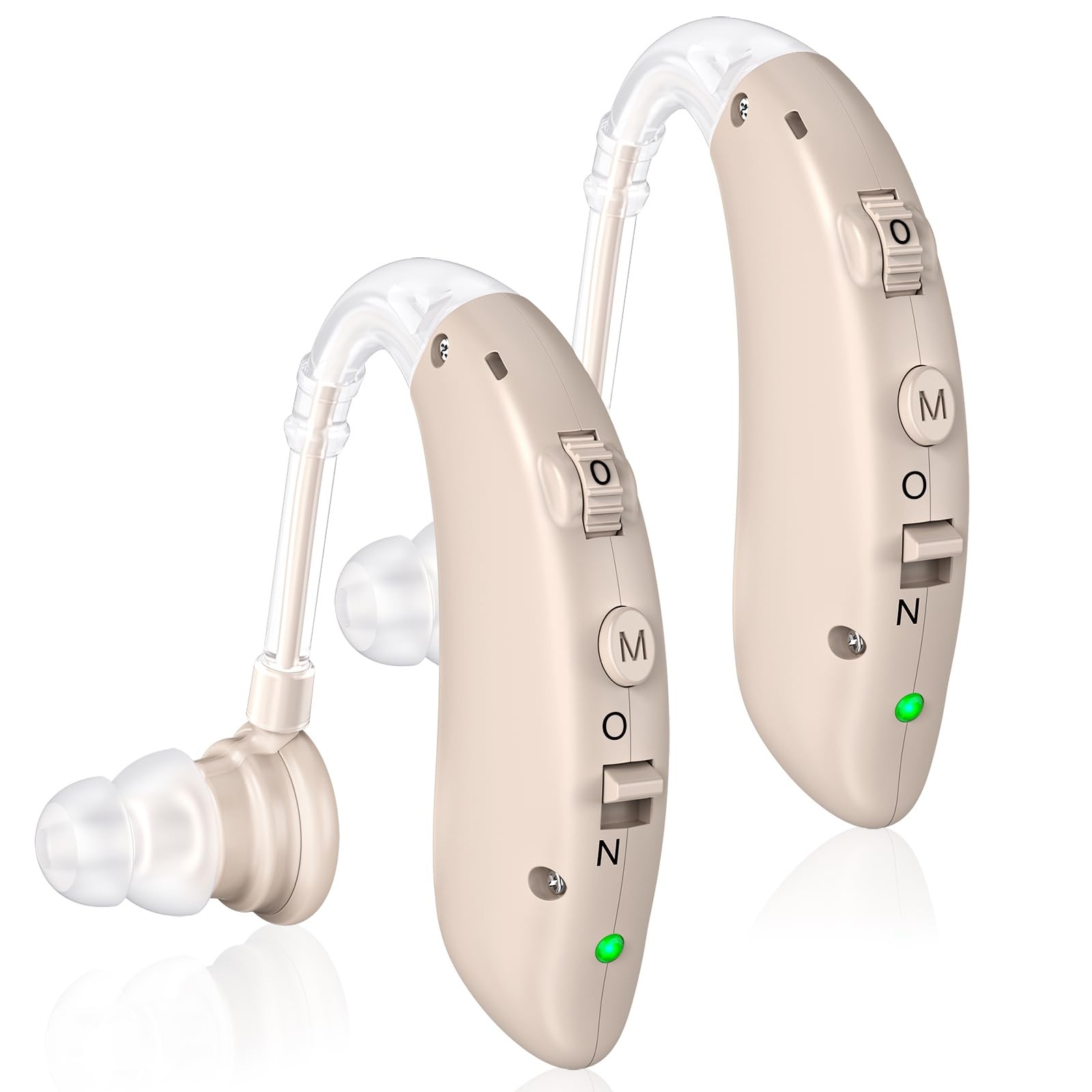
Generic Amplifier Rechargeable Hearing Aids for Seniors with Noise Cancelling,Hearing Loss Hearing Amplifiers,Digital Hearing Aid,Sound amplifier with Volume Control
Built-in rechargeable battery eliminates the need for regular disposable battery purchases
Buy on AmazonRechargeable hearing aids have become one of the most searched topics among adults who are newly exploring hearing solutions, and for good reason. Swapping tiny disposable batteries every few days is frustrating enough in ideal conditions. For older adults with reduced dexterity or vision challenges, it can become a genuine barrier to consistent hearing aid use.
The shift toward built-in rechargeable power has touched every tier of the market, from audiologist-dispensed prescription devices to over-the-counter amplifiers sold online. Rechargeable Hearing Aids covers the full landscape, but this article focuses specifically on what buyers need to understand before choosing a rechargeable device, including what the battery technology actually delivers in daily life.
What “Rechargeable” Actually Means in a Hearing Aid
Not all rechargeable hearing aids use the same battery system, and the differences matter more than marketing language suggests.
Lithium-Ion vs. Silver-Zinc: The Two Main Battery Types
The majority of rechargeable hearing aids sold today use lithium-ion batteries, the same general chemistry found in smartphones. Audiologists writing in The Hearing Journal have noted that lithium-ion cells hold a charge well across temperature ranges and maintain consistent output voltage through most of the discharge cycle, which translates to stable amplification throughout the day rather than gradual fade.
Silver-zinc rechargeable batteries appear in a smaller number of devices. Manufacturer documentation from companies that use this chemistry describes it as offering a higher energy density in a compact cell, but owner reviews on Hearing Tracker forums have pointed to shorter overall battery lifespan across charge cycles compared to lithium-ion. For most buyers, lithium-ion is the practical default.
What Overnight Charging Delivers
Most current rechargeable hearing aids are designed around a single overnight charge producing roughly 16 to 24 hours of use under typical listening conditions. Manufacturer documentation consistently qualifies this figure with the phrase “typical use,” which is worth noting. Streaming audio from a smartphone via Bluetooth draws significantly more power than passive amplification. If a user streams television audio or phone calls for several hours daily, real-world battery life may fall meaningfully below the stated maximum.
The practical implication is straightforward: overnight charging works well for most daily routines. The complication arises with travel. Someone on a long international flight, or staying somewhere without reliable power access, cannot simply swap in fresh batteries the way they could with a disposable-battery device. That tradeoff is genuine and worth weighing honestly before purchase.
Behind-the-Ear vs. In-the-Ear Rechargeable Form Factors
Rechargeable batteries require physical space that disposable zinc-air batteries do not, because the charging contacts and the cell itself both add volume. This is why the majority of rechargeable models are receiver-in-canal (RIC) or behind-the-ear (BTE) designs, where the battery sits in the component resting behind the ear.
Fully-in-canal (CIC) and invisible-in-canal (IIC) rechargeable models exist but remain far less common. Owner reviews on Hearing Tracker consistently note that compact in-ear designs offering rechargeability often compromise on battery capacity, resulting in shorter daily runtime. Buyers prioritizing the smallest possible device may find they are choosing between form factor and battery convenience, not getting both simultaneously.
Prescription vs. OTC Rechargeable Hearing Aids
The regulatory landscape for hearing aids changed significantly in 2022, when the FDA finalized rules allowing over-the-counter hearing aids to be sold directly to adults with perceived mild-to-moderate hearing loss. Rechargeable options exist across both categories, but they serve meaningfully different needs.
Prescription rechargeable devices, fitted by a licensed audiologist, include programming customized to an individual’s audiogram. The audiologist can adjust the device across multiple follow-up visits, and the fitting process accounts for the specific shape of the ear canal. Ruth has worn the Phonak Audeo, a prescription RIC device, since 2019, and the difference between its programmed output and her Jabra Enhance Pro’s factory settings was noticeable to her immediately in noisy restaurant environments.
OTC rechargeable amplifiers and hearing aids are appropriate for a narrower range of users: those with mild-to-moderate loss who are comfortable with self-fitting or app-based adjustments, and who do not require the precision of a clinical fitting. The category is genuine and useful, but consumer publications including Consumer Reports have cautioned that OTC devices are not appropriate substitutes for prescription aids in moderate-to-severe loss cases.
Top Picks
Rechargeable Hearing Aids for Seniors with Noise canceling
The Rechargeable Hearing Aids for Seniors with Noise canceling, Hearing Loss Hearing Amplifiers, Digital Hearing Aid, Sound amplifier with Volume Control is a behind-the-ear amplifier positioned in the budget tier of the rechargeable market. It is sold as a personal sound amplification product (PSAP) rather than as an FDA-registered hearing aid, a distinction that matters for buyers with clinically diagnosed hearing loss.
The device’s most straightforward practical advantage is its built-in rechargeable battery. Manufacturer documentation states that a full charge supports a typical day of use, which removes the recurring cost and physical difficulty of purchasing and installing size-312 or size-13 disposable batteries. For older adults whose dexterity makes battery changes challenging, this is a meaningful quality-of-life consideration.
Owner reviews on the product’s Amazon listing describe it primarily as a volume amplifier useful in quiet one-on-one conversations and for television use at home. Verified buyers note that the noise canceling feature reduces some background hum, though the feedback from users with more active listening environments, such as crowded family gatherings or restaurants, is more mixed. The device includes a physical volume control wheel, which reviewers consistently describe as easy to operate without looking at the device.
The honest limitation here is the same one that applies across budget amplifier products generally. Audiologists writing in The Hearing Journal have noted that devices in this category apply broadband amplification rather than the frequency-specific gain adjustments that a prescription device delivers based on an audiogram. For someone with mild, relatively flat hearing loss who wants an affordable rechargeable option for everyday home use, that may be entirely acceptable. For someone with moderate-to-severe loss or with significant high-frequency drop-off, the limitations of non-fitted amplification will likely be apparent.
The rechargeable design does carry one genuine constraint worth stating plainly. Because the battery is built in and not user-replaceable, someone who forgets to charge overnight, or who is traveling without their charging case, has no backup option. Disposable-battery users can carry spare batteries in a pocket. Rechargeable users cannot carry a spare charge the same way. This is not a reason to avoid the product, but it is a real-world consideration that owner reviews on Amazon mention repeatedly, particularly among buyers who travel frequently.
Check current price on Amazon.
Buying Guide: How to Choose a Rechargeable Hearing Aid
Assess Your Degree of Hearing Loss First
The single most important step before purchasing any hearing aid or amplifier is understanding the degree and type of hearing loss involved. A hearing evaluation from a licensed audiologist produces an audiogram, a graph showing hearing threshold levels across frequencies. That document determines whether OTC devices are medically appropriate or whether a prescription fitting is necessary.
Manufacturer documentation for OTC products consistently specifies that they are intended for adults with perceived mild-to-moderate hearing loss. Using an under-powered amplifier for moderate-to-severe loss does not just produce inadequate results. It can also delay access to properly fitted care. Audiologists writing in The Hearing Journal have noted that many adults wait years before seeking evaluation, and beginning with an inappropriate OTC device can extend that delay further.
Match Battery Life to Your Daily Routine
Before choosing a rechargeable device, think concretely about how you will actually use it across a full day. The key variables are total hours of wear, amount of Bluetooth streaming, and whether you have a reliable charging opportunity each night.
For most home-based routines, overnight charging is entirely sufficient. The more demanding scenario involves extended days away from home, travel across time zones, or regular outdoor activities where charging access is limited. Field reports from Hearing Tracker community discussions indicate that users who travel frequently often keep a disposable-battery backup device for exactly these situations, even when their primary device is rechargeable. Our broader rechargeable hearing aids guide includes a detailed comparison of battery life claims across major brands.
Understand the Difference Between Amplifiers and Hearing Aids
The regulatory distinction between personal sound amplification products (PSAPs) and FDA-registered hearing aids is not marketing language. It reflects meaningfully different standards. Hearing aids must meet FDA performance and labeling requirements. PSAPs, which include many budget rechargeable products sold online, are consumer electronics subject to different rules.
This does not mean PSAPs have no value. For someone with very mild loss who wants basic amplification for specific situations, a rechargeable PSAP may serve its intended purpose well. But buyers should read product labeling carefully and not assume that any device sold as a “hearing aid” online has been evaluated or cleared by the FDA as a medical device.
Consider the Full Cost of Ownership
The rechargeable advantage is most visible at the purchase stage: no ongoing cost of disposable batteries. But the full cost picture includes the device price itself, any accessories such as replacement charging cases, and eventual battery degradation over time.
Lithium-ion batteries in hearing aids typically retain adequate capacity for two to three years of daily use before performance begins to decline noticeably. Some manufacturers offer battery replacement services; others require full device replacement at that point. Asking this question before purchase, particularly for mid-range and premium devices, is worthwhile. Budget-tier products generally do not offer manufacturer battery replacement services.
Evaluate App Control and Adjustability
Many rechargeable hearing aids, including OTC devices, offer smartphone app control for volume and program adjustments. The usefulness of this feature varies significantly by product. Audiologists writing in The Hearing Journal have noted that app-based self-fitting, when implemented well, can meaningfully improve OTC outcomes for users who engage with the adjustment process consistently.
However, verified buyer reviews of several budget rechargeable products note that app functionality is often limited to basic volume control rather than frequency-specific programming. If app-based customization is important to a buyer’s use case, reading owner reviews specifically about the app experience, not just the sound quality, is a worthwhile step before purchasing.
Frequently Asked Questions
How long do rechargeable hearing aid batteries last on a single charge?
Most rechargeable hearing aids are designed to deliver between 16 and 24 hours of use on a full overnight charge under typical conditions. Bluetooth streaming, which draws more power than passive amplification, will reduce that figure. Manufacturer documentation for most devices qualifies stated battery life with “typical use,” so buyers who stream audio heavily should expect real-world runtime closer to the lower end of the published range. Charging overnight before each day of use is the standard approach for most wearers.
Can I use a rechargeable hearing aid if I forget to charge it overnight?
If a rechargeable hearing aid runs out of power and no charger is available, the device cannot be used until it is recharged. Unlike disposable-battery devices, there is no option to swap in fresh cells. Some charging cases offer portable battery capacity that can top up the hearing aids away from a wall outlet, but this depends on the specific product. Buyers who travel frequently or who have unpredictable daily routines may want to verify whether their chosen device’s charging case includes portable battery capacity.
Are rechargeable hearing aids appropriate for severe hearing loss?
Degree of loss is a separate question from battery type. Rechargeable technology is available across the full range, from budget amplifiers intended for mild loss to premium prescription devices for severe and profound loss. The more important question is whether the device is appropriately fitted and programmed for the individual’s audiogram. Budget-tier rechargeable amplifiers sold online are generally not appropriate for moderate-to-severe loss, regardless of their battery design.
How many years will a rechargeable hearing aid battery last before it degrades?
Lithium-ion batteries in hearing aids typically maintain adequate performance for approximately two to three years of daily charging cycles, after which capacity begins to decline noticeably. This is consistent with the general performance profile of lithium-ion technology across consumer electronics. Some hearing aid manufacturers offer battery replacement services at that point; others require full device replacement. Buyers purchasing mid-range or premium rechargeable devices should ask about battery replacement options before committing to a specific brand or model.
Is a rechargeable hearing aid the same thing as a rechargeable hearing amplifier?
No, these are different product categories with different regulatory standards. FDA-registered hearing aids must meet specific performance and labeling requirements. Personal sound amplification products (PSAPs), which include many rechargeable amplifiers sold at budget price points online, are consumer electronics that do not carry the same regulatory requirements. Both can use rechargeable batteries, and both can be useful in the right context. However, for anyone with clinically diagnosed hearing loss, particularly at moderate or greater severity, an FDA-registered hearing aid fitted by a licensed audiologist is the appropriate starting point.
<script type="application/ld+json">
{
 "@context": "https://schema.org",
 "@type": "FAQPage",
 "mainEntity": [
 {
 "@type": "Question",
 "name": "How long do rechargeable hearing aid batteries last on a single charge?",
 "acceptedAnswer": {
 "@type": "Answer",
 "text": "Most rechargeable hearing aids are designed to deliver between 16 and 24 hours of use on a full overnight charge under typical conditions. Bluetooth streaming, which draws more power than passive amplification, will reduce that figure. Manufacturer documentation for most devices qualifies stated battery life with 'typical use,' so buyers who stream audio heavily should expect real-world runtime closer to the lower end of the published range. Charging overnight before each day of use is the standard approach for most wearers."
 }
 },
 {
 "@type": "Question",
 "name": "Can I use a rechargeable hearing aid if I forget to charge it overnight?",
 "acceptedAnswer": {
 "@type": "Answer",
 "text": "If a rechargeable hearing aid runs out of power and no charger is available, the device cannot be used until it is recharged. Unlike disposable-battery devices, there is no option to swap in fresh cells. Some charging cases offer portable battery capacity that can top up the hearing aids away from a wall outlet, but this depends on the specific product. Buyers who travel frequently or who have unpredictable daily routines may want to verify whether their chosen device's charging case includes portable battery capacity."
 }
 },
 {
 "@type": "Question",
 "name": "Are rechargeable hearing aids appropriate for severe hearing loss?",
 "acceptedAnswer": {
 "@type": "Answer",
 "text": "Degree of loss is a separate question from battery type. Rechargeable technology is available across the full range, from budget amplifiers intended for mild loss to premium prescription devices for severe and profound loss. The more important question is whether the device is appropriately fitted and programmed for the individual's audiogram. Budget-tier rechargeable amplifiers sold online are generally not appropriate for moderate-to-severe loss, regardless of their battery design. A licensed audiologist can assess whether a prescription rechargeable device is indicated."
 }
 },
 {
 "@type": "Question",
 "name": "How many years will a rechargeable hearing aid battery last before it degrades?",
 "acceptedAnswer": {
 "@type": "Answer",
 "text": "Lithium-ion batteries in hearing aids typically maintain adequate performance for approximately two to three years of daily charging cycles, after which capacity begins to decline noticeably. This is consistent with the general performance profile of lithium-ion technology across consumer electronics. Some hearing aid manufacturers offer battery replacement services at that point; others require full device replacement. Buyers purchasing mid-range or premium rechargeable devices should ask about battery replacement options before committing to a specific brand or model."
 }
 },
 {
 "@type": "Question",
 "name": "Is a rechargeable hearing aid the same thing as a rechargeable hearing amplifier?",
 "acceptedAnswer": {
 "@type": "Answer",
 "text": "No, these are different product categories with different regulatory standards. FDA-registered hearing aids must meet specific performance and labeling requirements. Personal sound amplification products (PSAPs), which include many rechargeable amplifiers sold at budget price points online, are consumer electronics that do not carry the same regulatory requirements. Both can use rechargeable batteries, and both can be useful in the right context. However, for anyone with clinically diagnosed hearing loss, particularly at moderate or greater severity, an FDA-registered hearing aid fitted by a licensed audiologist is the appropriate starting point."
 }
 }
 ]
}
</script>Where to Buy
Generic Amplifier Rechargeable Hearing Aids for Seniors with Noise Cancelling,Hearing Loss Hearing Amplifiers,Digital Hearing Aid,Sound amplifier with Volume ControlSee Rechargeable Hearing Aids for Seniors… on Amazon