Over the Counter Hearing Aids: What You Need to Know

Affiliate disclosure: Some links on this page are affiliate links. If you buy through them we earn a small commission at no extra cost to you. Recommendations are research-driven; we don't claim personal use of every product reviewed. Product prices and availability are accurate as of the date published and are subject to change. Always check Amazon for current pricing before purchasing. Learn more.
Important:licensed audiologist or hearing healthcare professional
Quick Picks
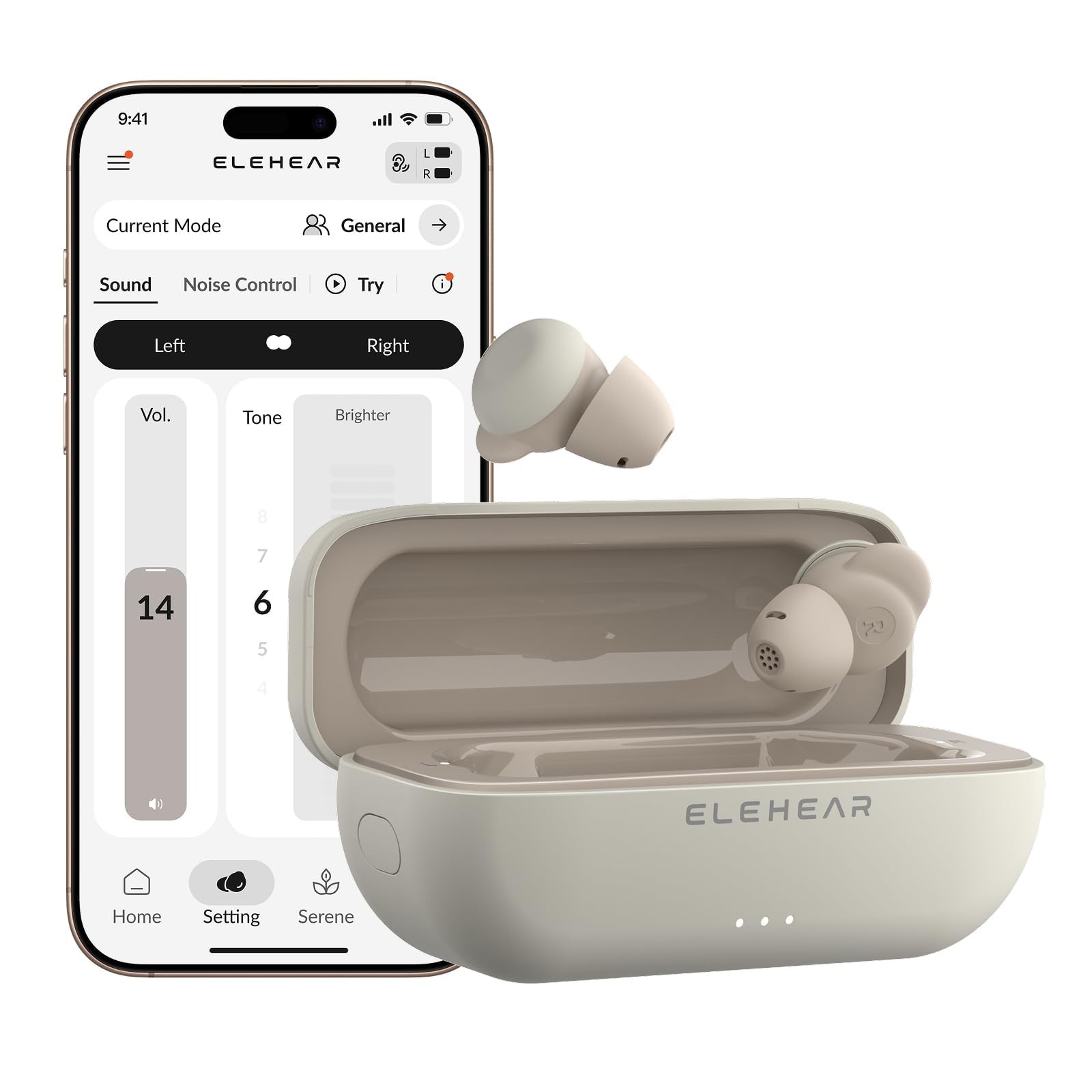
ELEHEAR-Delight OTC Hearing Aids for Seniors and Adults, AI Powered Speech Enhancement, Superior Sound Quality, Comfortable & Discreet Design, Bluetooth 5.3 and App Control, Mist White
Available for purchase without a prescription or audiologist fitting appointment
Buy on AmazonOver the counter hearing aids became a legal reality for American consumers in October 2022, when the FDA finalized rules allowing adults with perceived mild-to-moderate hearing loss to buy amplification devices without a prescription or audiologist visit. That single regulatory change opened a market that had previously required clinic appointments, professional fittings, and price tags that put hearing help out of reach for millions of people.
The options now filling store shelves and online listings range widely in quality, features, and intended use. Our OTC Hearing Aid Buyers Guide covers the full landscape, and this article focuses specifically on what to look for and what to expect before you commit to a purchase.
What the FDA Rule Actually Changed
Before October 2022, every hearing aid sold in the United States required either a prescription or a signed waiver acknowledging that a buyer was declining a medical evaluation. The new FDA category eliminated that requirement for a defined subset of buyers: adults 18 and older who self-identify as having mild-to-moderate hearing loss. Devices marketed under the OTC category must meet specific labeling, output, and safety standards, but they do not require audiologist involvement at the point of sale.
What the rule did not change is equally important to understand. Prescription hearing aids, fitted and programmed by a licensed audiologist, remain the appropriate path for anyone with moderate-to-severe or profound hearing loss, single-sided deafness, sudden hearing loss, or ear canal abnormalities. The American Speech-Language-Hearing Association has consistently noted that untreated or undertreated hearing loss carries real cognitive and social consequences, and that OTC devices are a category extension rather than a replacement for professional audiological care.
For buyers whose loss genuinely falls in the mild-to-moderate range and who are comfortable managing device settings through a smartphone app, OTC hearing aids represent a meaningful access improvement. For buyers who are uncertain about the degree of their loss, an audiogram from a licensed audiologist or hearing instrument specialist is a reasonable first step, even if they ultimately purchase an OTC device.
Who Is (and Is Not) a Good Candidate
Understanding Your Hearing Profile
Self-assessment is the entry point for OTC eligibility, but it has real limits. Audiologists writing in The Hearing Journal have repeatedly flagged that consumers frequently underestimate their degree of loss, particularly in the high-frequency ranges that affect speech clarity. Someone who struggles primarily in noisy restaurants may have moderate-to-severe loss rather than mild loss, even if they hear conversation acceptably in quiet rooms.
The practical screening question is: do you struggle to hear in most listening environments, or primarily in specific challenging ones? Buyers who miss speech even in quiet, one-on-one conversations, or who require television volume well above household average in normal viewing conditions, may be outside the OTC target range. Ruth, my mother, was diagnosed with moderate-to-severe loss in 2019 and was correctly directed toward prescription Phonak Audeo devices rather than OTC options, precisely because her needs exceeded what self-fitting technology could reliably address at that time.
What “Mild-to-Moderate” Looks Like in Daily Life
Audiologically, mild hearing loss is typically defined as a hearing threshold between 26 and 40 decibels, and moderate loss falls between 41 and 55 decibels. In practical terms, mild loss often shows up as occasional difficulty understanding speech in background noise, asking people to repeat themselves in group settings, or missing higher-pitched voices like children’s or women’s speech. Moderate loss typically means regular difficulty following conversation without visual cues, consistent television volume increases, and trouble on phone calls without speaker mode.
If that description fits your experience and you have no history of ear pain, drainage, sudden changes in hearing, or dizziness, you are likely in the population the FDA OTC category was designed to serve. If you have any of those medical symptoms, a physician evaluation should come before any device purchase.
Top Picks
ELEHEAR Delight OTC Hearing Aids
The ELEHEAR-Delight OTC Hearing Aids for Seniors and Adults represents the newer generation of AI-assisted OTC devices, incorporating speech enhancement processing alongside Bluetooth 5.3 connectivity and a companion smartphone app for self-fitting adjustments.
The AI speech enhancement feature is designed to distinguish speech signals from competing background noise, a function that earlier generations of OTC amplifiers handled poorly. Owner reviews on Hearing Tracker and Amazon indicate that buyers report meaningful improvement in restaurant and group settings, which aligns with the design goal of prioritizing speech clarity over simple volume amplification. The Mist White colorway and described form factor suggest a receiver-in-canal or similar discreet style, which verified buyers note tends to reduce the social stigma that keeps many adults from wearing amplification consistently.
The companion app, enabled by Bluetooth 5.3, allows users to adjust amplification levels, switch listening programs, and in many cases run an in-app hearing test that generates a starting amplification profile. Manufacturer documentation for devices in this category typically notes that the self-fitting process is built on a hearing screening rather than a full audiological evaluation, which is an important distinction. The resulting fit is appropriate for many users with straightforward hearing profiles, but audiologists writing in Hearing Review have consistently noted that complex hearing profiles, such as asymmetric loss or steeply sloping audiograms, benefit from professional programming that app-based self-fitting cannot fully replicate.
The intended use range is mild-to-moderate hearing loss, which places this device squarely within FDA OTC parameters. Buyers with moderate-to-severe or severe loss should treat that boundary seriously. Field reports from Amazon’s verified buyer pool suggest that users at the upper edge of the moderate range sometimes find maximum amplification output insufficient, a limitation common across the OTC category rather than unique to this specific device.
On the positive side, the removal of any prescription or clinic requirement means buyers can purchase, receive, and begin using the devices without scheduling delays. For adults in areas with limited audiological access, or for those who want a lower-commitment entry point before investing in a full prescription fitting, that accessibility is a genuine advantage. The Bluetooth connectivity also enables direct audio streaming from smartphones, which verified buyers frequently list as a significant quality-of-life improvement for phone calls and media.
Check current price on Amazon.
Buying Guide: What to Evaluate Before You Purchase
Degree of Loss and Device Output
The single most important variable in OTC hearing aid selection is whether a device’s maximum output actually matches your hearing needs. Manufacturer documentation for OTC devices must specify output limits, and the FDA requires OTC devices to stay within defined maximum output levels that are lower than prescription device ceilings. For buyers at the mild end of the loss spectrum, this is rarely a problem. For buyers at the moderate end, it is worth comparing stated gain figures across devices rather than assuming all OTC products deliver equivalent amplification. Our full OTC category breakdown includes comparison notes on output specs across the leading brands.
App Control and Self-Fitting Quality
Most current-generation OTC hearing aids pair with a smartphone app for volume control and program switching. The quality of that app experience varies considerably. Budget-tier devices sometimes offer only basic volume adjustment with no program customization. Mid-range and premium OTC devices increasingly include in-app hearing screens that generate a customized amplification profile, more closely approximating what an audiologist does with full diagnostic equipment. Audiologists writing in The Hearing Journal note that app-based fitting is most reliable for flat or gently sloping hearing losses and less reliable for high-frequency-heavy or asymmetric losses.
Battery type and charging method also influence daily usability. Rechargeable lithium-ion devices eliminate the fine motor challenge of swapping size 10 or 312 batteries, which owner reviews consistently identify as a significant factor for users with arthritis or reduced hand dexterity. Verified buyers on Hearing Tracker frequently note that rechargeable OTC devices see higher consistent use rates than disposable-battery counterparts among older adults.
Listening Environment Priorities
No hearing aid, prescription or OTC, performs equally well in every listening environment. Before selecting a device, it helps to rank your most challenging situations. One-on-one conversation in quiet rooms demands very different processing than a noisy restaurant, a worship service with poor acoustics, or a phone call without Bluetooth streaming. Devices with multiple listening programs, accessible by app or a physical button, allow users to switch settings as environments change. Field reports from hearing aid user communities indicate that single-program devices are adequate for buyers whose challenges are primarily in one consistent environment, but fall short for buyers who move across varied settings throughout the day.
Form Factor and Comfort
OTC hearing aids are currently available in several form factors: receiver-in-canal (RIC), behind-the-ear (BTE), and in-the-ear or in-the-canal styles. RIC and discreet BTE designs tend to dominate the current OTC market because they allow for a range of ear tip sizes that buyers can self-fit without custom ear molds. Comfort directly affects wearing consistency, and consistent wear is the entire point. Verified buyer reviews on Amazon and Hearing Tracker frequently identify ear tip fit as the variable that determines whether a device gets used daily or ends up in a drawer.
Return Policy and Trial Period
Given that self-fitting is inherently less precise than professional programming, a meaningful trial period matters more for OTC devices than for almost any other consumer electronics purchase. Manufacturer documentation and retailer listings for OTC hearing aids vary from 30-day to 45-day trial windows. Some retailers offer free returns; others require the buyer to pay return shipping. Before completing any purchase, confirming the specific return terms is worth the two minutes it takes, because a device that does not deliver adequate clarity in your real-world environments should go back within the window rather than sit unused.
Closing Thoughts
The OTC hearing aid category has matured considerably since the FDA rule took effect. Devices available today offer meaningfully better processing, more intuitive self-fitting tools, and more reliable Bluetooth integration than the earliest wave of post-regulation products. For adults with mild-to-moderate hearing loss who want accessible, lower-commitment hearing support, the category delivers real options at a range of price points.
The important limits have not changed, though. OTC devices are not a substitute for audiological care when loss is more significant, when medical symptoms are present, or when a device’s self-fitting ceiling proves insufficient after a genuine trial. For buyers who have been told by an audiologist that their loss is moderate-to-severe or beyond, prescription devices remain the appropriate path. For everyone else, the resources in our OTC Hearing Aid Buyers Guide are designed to help you evaluate your options with accurate information rather than marketing language.
Frequently Asked Questions
Can I use an OTC hearing aid if I have never had an audiogram?
You can purchase OTC hearing aids without any prior testing, because FDA rules require no prescription or diagnostic documentation. That said, an audiogram provides useful information about whether your loss actually falls within the mild-to-moderate range that OTC devices are designed to address. Many audiologists offer audiograms without requiring a device purchase commitment. Knowing your specific loss profile helps you evaluate whether a given device’s output is adequate for your needs before buying.
How do AI hearing aids differ from basic amplifiers?
Basic personal sound amplification products (PSAPs) raise overall volume without distinguishing between speech and background noise. AI-assisted hearing aids apply signal processing algorithms that attempt to identify speech frequencies and suppress competing noise in real time. Owner reviews on Hearing Tracker generally report better performance in group and restaurant settings from AI-enabled devices compared to simple amplifiers. The quality of AI processing varies by manufacturer and price tier, so verified buyer feedback in specific listening environments is worth reviewing before purchase.
Are OTC hearing aids appropriate for seniors with more significant hearing loss?
OTC devices are designed for adults who self-identify as having mild-to-moderate hearing loss, regardless of age. Age alone does not determine OTC eligibility. However, audiologists writing in The Hearing Journal note that age-related hearing loss frequently progresses into the moderate-to-severe range, particularly for adults in their 70s and 80s, meaning that many older buyers may need prescription devices rather than OTC options. If an OTC device at maximum output still produces insufficient clarity, that is a meaningful signal to pursue a professional evaluation.
What is the typical adjustment period for a new OTC hearing aid?
Audiological literature consistently notes that first-time hearing aid users experience an adjustment period ranging from a few weeks to several months as the brain recalibrates to sounds it has not been processing fully. Verified buyers on Amazon and Hearing Tracker frequently describe initial sounds as tinny or overly bright before the perceptual adjustment occurs. Starting with the device in lower-demand environments and gradually introducing noisier settings is a commonly reported approach among buyers who report long-term satisfaction.
Can OTC hearing aids connect directly to a smartphone or television?
Many current OTC hearing aids include Bluetooth connectivity that enables direct audio streaming from smartphones for calls, music, and media. Television connectivity typically requires a separate Bluetooth transmitter that plugs into the TV’s audio output, unless the television has built-in Bluetooth. Manufacturer documentation for individual devices specifies which audio sources are directly compatible. Verified buyers consistently rate direct phone streaming as a high-value feature, particularly for call clarity improvement.
{
 "@context": "https://schema.org",
 "@type": "FAQPage",
 "mainEntity": [
 {
 "@type": "Question",
 "name": "Can I use an OTC hearing aid if I have never had an audiogram?",
 "acceptedAnswer": {
 "@type": "Answer",
"text": "You can purchase OTC hearing aids without any prior testing, because FDA rules require no prescription or diagnostic documentation.Where to Buy
ELEHEAR-Delight OTC Hearing Aids for Seniors and Adults, AI Powered Speech Enhancement, Superior Sound Quality, Comfortable & Discreet Design, Bluetooth 5.3 and App Control, Mist WhiteSee ELEHEAR-Delight OTC Hearing Aids for … on Amazon