
Costco vs Sam's Club Hearing Aids: Comparison Guide

Affiliate disclosure: Some links on this page are affiliate links. If you buy through them we earn a small commission at no extra cost to you. Recommendations are research-driven; we don't claim personal use of every product reviewed. Product prices and availability are accurate as of the date published and are subject to change. Always check Amazon for current pricing before purchasing. Learn more.
Important:licensed audiologist or hearing healthcare professional
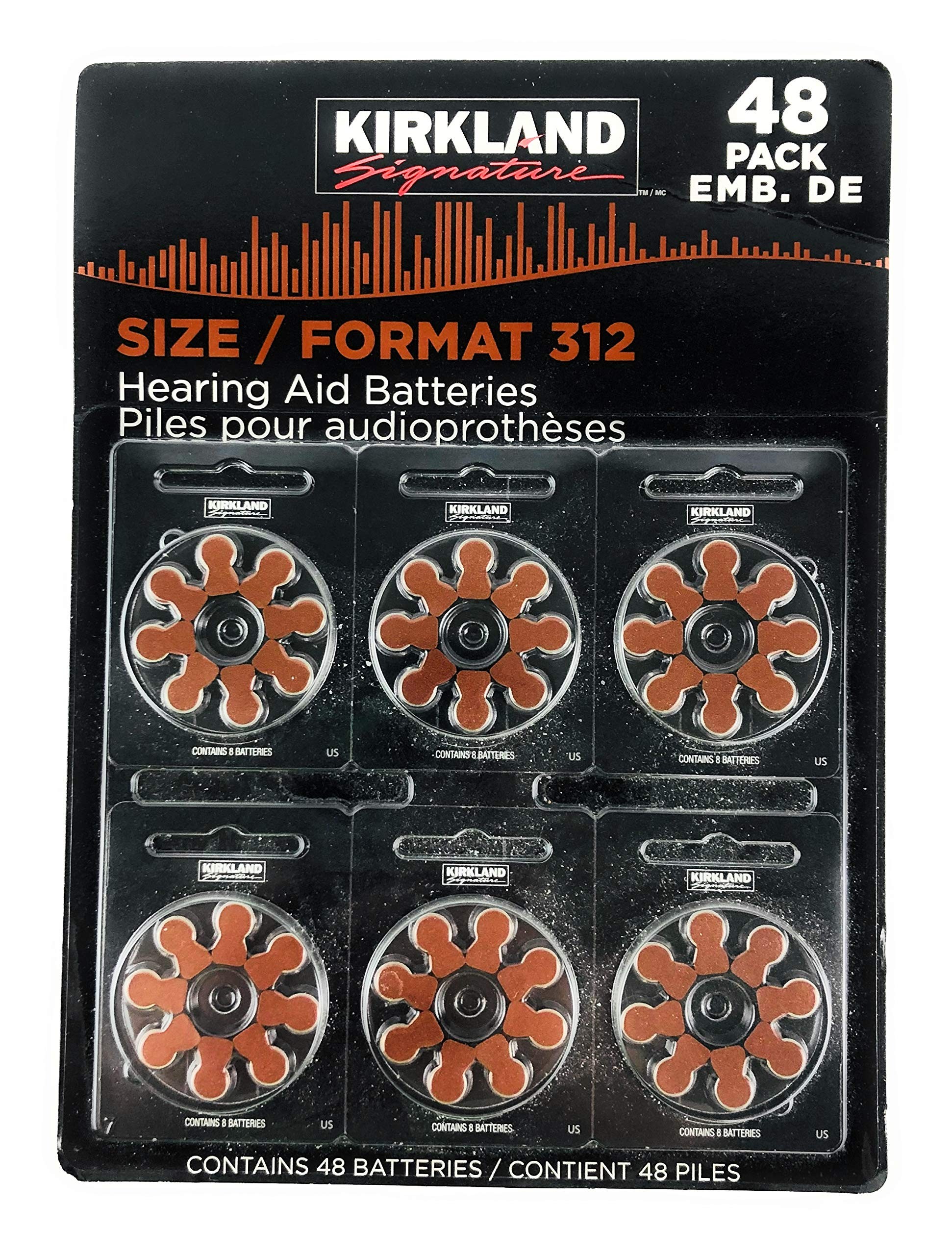 Kirkland Signature Kirkland Signature 1.45 Volt Mercury Free Premium Quality Hearing Aid Batteries, 312 (48-Pack) Buy on Amazon
 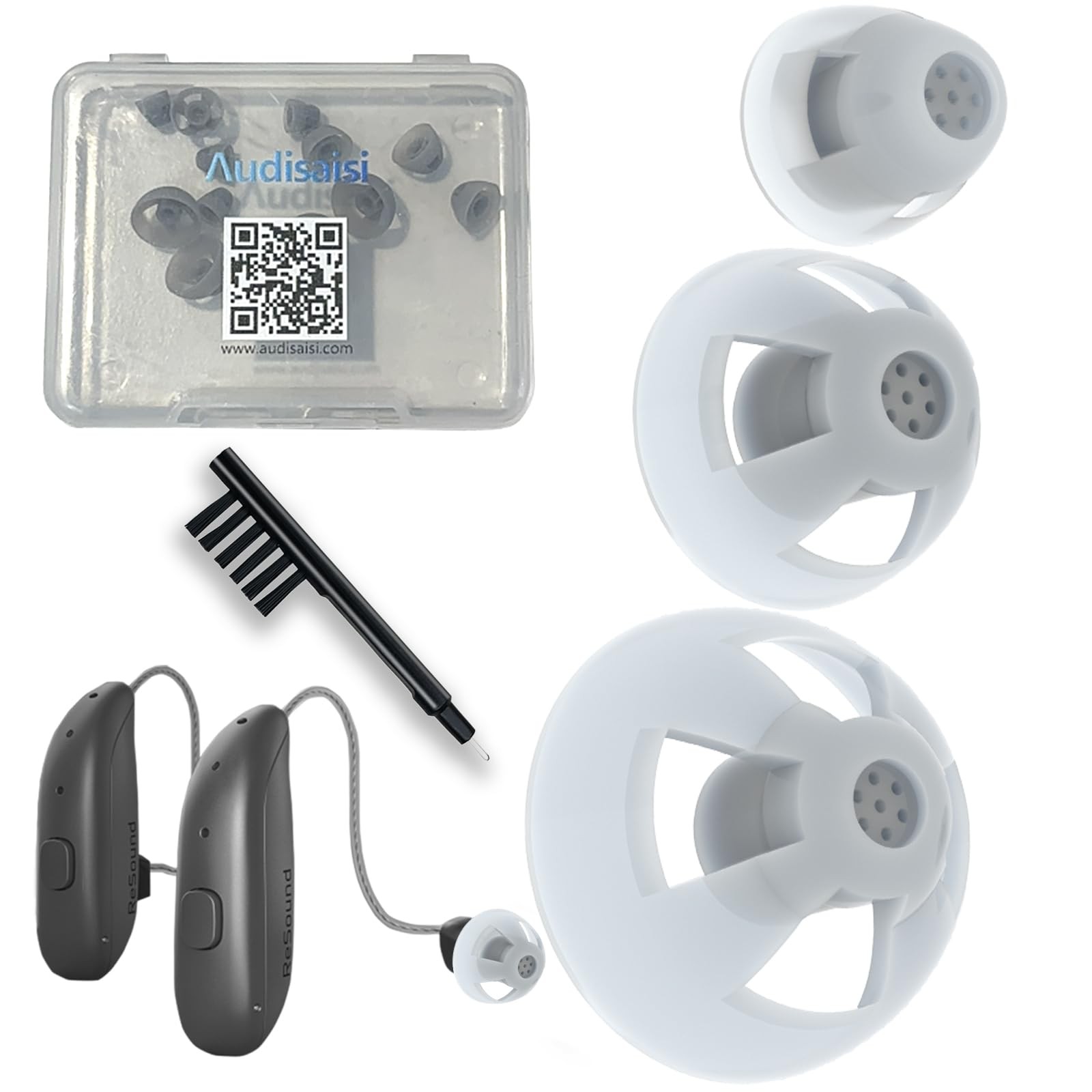 Jabra Resound Hearing aid Domes Open Comfortable Silicone Design Noise Reduction Enhanced Acoustics Breathable and Easy to Clean Resound Hearing Aid Accessories Jabra Hearing Aid Domes (Gray, Mix-12pcs) Buy on Amazon
 Choosing where to buy hearing aids , and what accessories to stock alongside them , involves more decisions than most buyers expect. The gap between a warehouse club fitting and an online OTC purchase is significant, and the right answer depends on the degree of your hearing loss, your comfort with self-fitting, and how much ongoing support you want. This comparison covers the products and services most relevant to buyers researching Costco Hearing Aids and the Sam’s Club alternative.
The five products here span the full range: prescription aids available at Costco’s hearing centers, zinc-air replacement batteries, silicone domes for RIC-style aids, and an OTC Bluetooth option for buyers who prefer to skip the fitting appointment entirely. Each serves a different buyer at a different point in the decision.
What to Look For Before You Buy
Degree of Hearing Loss Determines Your Starting Point
The single most consequential variable in this comparison is your audiogram , specifically, whether your loss is mild-to-moderate or severe-to-profound. Prescription hearing aids, including those fitted at warehouse club hearing centers, are programmed to match your individual audiogram across frequencies. Over-the-counter aids are legally authorized for mild-to-moderate loss only. Buying an OTC device for a severe loss profile is not just a suboptimal choice; it is a device that cannot amplify sufficiently to compensate for the degree of loss involved.
If you have not had a recent audiogram, that is genuinely the first step , not a product decision. Many Costco Hearing Aid Centers offer hearing evaluations at no charge to members, which is a meaningful advantage over starting the process with an online purchase.
Prescription vs. OTC: What “Fitted” Actually Means
A professionally fitted hearing aid is programmed using real-ear measurement or a prescriptive formula tied to your specific audiogram. The audiologist (or hearing instrument specialist) adjusts gain across frequency bands to match your loss pattern , boosting high-frequency speech sounds where you need it, limiting amplification in ranges where your hearing is intact. This is meaningfully different from self-fitting, which typically involves answering a tone-based questionnaire in a phone app and applying a generic amplification curve.
Neither approach is universally superior. For straightforward mild-to-moderate losses with no complicating factors, self-fitting OTC aids perform well in real-world use. For complex or asymmetric loss, or for buyers who have struggled with previous aids, professional fitting delivers substantially better outcomes. The full range of Costco Hearing Aids options reflects this spectrum , from professionally fitted prescription models to accessories that support existing devices.
Accessories Are Not Interchangeable
Hearing aid batteries and domes are consumable accessories, but they are not universally compatible. Zinc-air batteries come in four standardized sizes , 10, 312, 13, and 675 , and using the wrong size physically will not work; using a low-quality battery in the correct size can cause inconsistent performance and shortened device runtime. Domes for receiver-in-canal (RIC) aids are similarly size-dependent: the dome must match the receiver’s diameter, not simply your ear canal’s general shape.
Before ordering accessories, confirm the specific battery size stamped on your current battery door and the receiver diameter specified in your hearing aid documentation. Manufacturer model numbers matter here in a way they do not for most consumer products.
Service and Follow-Up: The Factor Most Buyers Undervalue
Buyers focused on upfront cost frequently underestimate the value of post-purchase service. Prescription hearing aids fitted at a warehouse club typically include follow-up adjustments, loss and damage coverage, and access to the fitting professional for reprogramming as your hearing changes. OTC aids, by design, do not include this relationship , support is via app, chat, or return policy.
For buyers who are comfortable with technology and have stable, straightforward hearing loss, that trade-off is reasonable. For buyers who are new to amplification, managing tinnitus alongside hearing loss, or fitting aids for an older family member who is not comfortable troubleshooting apps, the service layer has real value that does not appear in any product listing.
Top Picks
Philips HearLink Hearing Aids (Available at Costco)
Philips HearLink Hearing Aids represents the clearest case for the warehouse club fitting model. Manufactured by Demant , the same parent company as Oticon , these are full-featured prescription aids sold exclusively through Costco Hearing Aid Centers and fitted by licensed hearing professionals. The Philips branding is exclusive to the Costco channel, which is why you will not find these devices through a traditional audiologist’s office or a competing retailer.
Owner reports on Hearing Tracker consistently note satisfaction with the fitting process and the quality of follow-up support. Costco’s hearing center model , salaried staff, no commission structure , removes a meaningful conflict of interest that exists in some traditional audiology retail settings. The audiologist or specialist is not financially incentivized to upsell a more expensive tier.
The limitation is structural: these aids require a Costco membership, an in-person fitting appointment, and geographic proximity to a Costco Hearing Aid Center. For buyers in rural areas or those managing a family member’s care from a distance, the in-person requirement is a real constraint. For everyone else, the combination of Demant-grade hardware, professional fitting, and warehouse club pricing makes HearLink one of the most defensible choices in the mid-range prescription segment.
Check current price on Amazon.
Kirkland Signature 1.45 Volt Mercury Free Premium Quality Hearing Aid Batteries, 312 (48-Pack)
Kirkland Signature 1.45 Volt Mercury Free Hearing Aid Batteries, Size 312 are the default bulk battery choice for most hearing aid wearers who use zinc-air disposables. Size 312 is the most common format for RIC and mini behind-the-ear aids , the dominant form factor in the current market , and the 48-pack quantity reflects the practical reality that regular wearers go through batteries quickly.
Zinc-air chemistry is the standard for hearing aids because it delivers consistent voltage across essentially the full discharge cycle, unlike alkaline cells, which taper. Verified buyers note that runtime is reliable and matches published specifications. The mercury-free formulation addresses environmental and health concerns without any documented trade-off in performance.
The ongoing cost of disposable batteries is the honest downside of this category. For buyers weighing rechargeable-battery aids against disposable models, the cumulative cost of zinc-air cells is a legitimate factor. For buyers already committed to disposable-battery aids, Kirkland Signature’s bulk pricing keeps that cost manageable.
Check current price on Amazon.
Kirkland Signature Premium Quality Hearing Aid Batteries 48 Pack 1.45 Volt Mercury Free Various Sizes (Size 10)
Kirkland Signature Premium Quality Hearing Aid Batteries, Size 10 covers the other common zinc-air format. Size 10 batteries are standard for completely-in-canal (CIC) and invisible-in-canal (IIC) aids , the smallest, most discreet form factors available. The 48-pack configuration is the same as the Size 312 version, and the performance profile is identical: consistent 1.45V output, mercury-free formulation, and reliable runtime.
The size distinction matters here more than it does with most consumer batteries. Size 10 and Size 312 are not interchangeable , the physical dimensions differ enough that the wrong size simply will not seat in the battery compartment. Buyers who wear CIC or IIC aids and have been purchasing Size 312 by mistake, or vice versa, will notice an immediate performance improvement from using the correct size.
Manufacturer documentation and verified buyer reports both confirm that Kirkland Signature zinc-air cells perform comparably to name-brand alternatives from Rayovac and Energizer at a meaningfully lower per-cell cost.
Check current price on Amazon.
Resound Hearing Aid Domes Open Comfortable Silicone Design
Resound Hearing Aid Domes are replacement silicone tips designed for RIC and receiver-in-canal aids, with the open dome style specifically intended for buyers with mild-to-moderate high-frequency loss. Open domes allow low-frequency sound to pass naturally into the ear canal , which reduces occlusion (the “talking in a barrel” sensation) , while the receiver amplifies the frequencies where the wearer actually needs help.
The mix-pack configuration (12 pieces in multiple sizes) is practical for buyers who are still calibrating which size provides the best seal and comfort for their specific ear canal diameter. Hearing Tracker community reports note that dome fit meaningfully affects sound quality and feedback management , a dome that is too small allows acoustic feedback; one that is too large causes discomfort during extended wear.
Compatibility is the critical variable. These domes are designed for ReSound and Jabra RIC aids, and the receiver diameter must match. Buyers with aids from other manufacturers , including the Philips HearLink , should verify receiver specifications before ordering. The fit confirmation step takes less than a minute with the device documentation in hand and prevents a return that is otherwise completely avoidable.
Check current price on Amazon.
AuraLink Bluetooth Hearing Aids for Seniors Adults
AuraLink Bluetooth Hearing Aids occupy the self-fitting OTC category. App-controlled amplification, Bluetooth 5.4 for audio streaming, and AI noise reduction are the headline features , and for buyers with mild-to-moderate loss who are comfortable managing a smartphone app, the feature set is competitive with aids sold at significantly higher price points through traditional channels.
The AI noise reduction and directional processing are genuine functional features, not marketing language. Owner reviews note improvement in restaurant and group-conversation environments, which are the specific use cases where most hearing aid wearers report the most difficulty. Bluetooth streaming for phone calls and music adds utility that many buyers in this category actively want.
The honest boundary is degree of loss. AuraLink, like all OTC aids, is designed and legally designated for mild-to-moderate hearing loss. Buyers with moderate-to-severe or severe-to-profound loss , the population that typically benefits most from amplification , will not receive adequate gain from a self-fitting OTC device. For that population, the professional fitting path, including warehouse club options, is not a premium upsell. It is the clinically appropriate choice. For everyone else, AuraLink is a reasonable entry point into amplification with lower friction than a clinical fitting.
Check current price on Amazon.
Buying Guide
Start With What You Actually Know About Your Hearing
Most buyers arrive at a hearing aid purchase with incomplete information about their own hearing loss. If you have a recent audiogram (within the past two years), you know your loss profile: the frequencies affected, the degree of loss at each frequency, and whether your loss is symmetric between ears. That information determines which products in this comparison are appropriate for you and which are not.
Buyers without a recent audiogram who are considering OTC aids should, at minimum, use the in-app hearing test included with most OTC devices as a rough screen. It is not a substitute for clinical evaluation, but it provides a baseline. Buyers considering prescription aids at a warehouse club should note that Costco Hearing Aid Centers typically provide hearing evaluations as part of the fitting process.
Warehouse Club vs. OTC: The Real Comparison
The Costco vs. Sam’s Club framing is common in search , but the more useful comparison is warehouse club prescription fitting vs. OTC self-fitting. Both Costco and Sam’s Club operate hearing centers with licensed professionals; the product selection and pricing structure are similar. The meaningful fork in the road is whether you need professional fitting at all.
Prescription aids fitted at a warehouse club include professional evaluation, device programming to your audiogram, and follow-up care. OTC aids like AuraLink include none of that , the value proposition is lower cost and higher accessibility. Buyers researching both paths will find the Costco hearing aid center model explained in more detail in the hub, including what to expect from an appointment.
Battery Size Is a Commitment
Choosing a hearing aid also means choosing a consumable ecosystem. If your aid uses Size 312 batteries, you will be buying Size 312 batteries for the life of the device. If it uses Size 10, same principle. Kirkland Signature’s 48-pack pricing is competitive, but the more important point is consistency: using the same quality battery in the correct size prevents the irregular performance and shortened runtime that some buyers attribute to device malfunction when the actual cause is battery quality.
Rechargeable hearing aids eliminate this variable entirely. Buyers evaluating prescription aids at a warehouse club should ask specifically about rechargeable options , the battery format is worth considering before the fitting, not after.
Dome Fit Affects Sound Quality More Than Most Buyers Expect
RIC hearing aid performance is meaningfully affected by dome selection and fit. Open domes, closed domes, and tulip domes provide different levels of occlusion management and acoustic seal , and the right style depends on your loss profile. Open domes are appropriate for high-frequency loss with relatively intact low-frequency hearing. Closed domes provide more gain for greater degrees of loss but increase the occlusion effect.
The sizing dimension is separate: a correctly styled dome in the wrong size will cause feedback, discomfort, or both. ReSound and Jabra dome accessories, including the mix-pack format, exist specifically to let buyers experiment with size before committing. If your current domes came with your aid and you have never evaluated alternatives, it is worth the low-friction test.
OTC Aids and the Mild-to-Moderate Boundary
The FDA’s OTC hearing aid category has a defined scope: it is authorized for adults with perceived mild-to-moderate hearing loss. The boundary is not arbitrary , it reflects the gain limits built into OTC devices by regulatory design. Moderate-to-severe and severe-to-profound loss requires prescription-level amplification, professional fitting, and ongoing audiological management.
Buyers who are uncertain whether their loss falls within the OTC-appropriate range , and many are genuinely uncertain , should treat that uncertainty as a reason to obtain a clinical evaluation before purchasing. Returning an OTC aid because it provided insufficient amplification is a common and avoidable experience.
Frequently Asked Questions
Is Costco or Sam’s Club better for hearing aids?
Both offer professionally fitted prescription aids through licensed hearing centers, and the clinical quality of fitting is comparable. Costco’s hearing center network is larger and more established, with more documented consumer feedback available on platforms like Hearing Tracker. Sam’s Club centers are fewer in number. For most buyers, geographic proximity and wait time for an appointment will be the deciding factors , not a meaningful quality difference between the two chains.
Can I buy Philips HearLink hearing aids without visiting a Costco store?
No. Philips HearLink aids are sold exclusively through Costco Hearing Aid Centers and require an in-person fitting appointment. They are not available through Amazon, third-party retailers, or Costco’s own e-commerce platform. The professional fitting is integral to the product , programming to your audiogram cannot be done remotely for this device category.
What is the difference between Size 10 and Size 312 hearing aid batteries?
Size 10 and Size 312 are both zinc-air disposable battery formats, but they are different physical sizes designed for different hearing aid form factors. Size 10 is used in smaller, more discreet aids like CIC and IIC styles. Size 312 is standard for RIC and mini behind-the-ear aids. The size code is printed on the battery’s tab and on the battery door of your hearing aid.
Are open domes appropriate for all types of hearing loss?
Open domes are specifically designed for mild-to-moderate high-frequency hearing loss where low-frequency hearing remains relatively intact. They allow low-frequency ambient sound to pass naturally into the ear canal, reducing the occlusion effect. For buyers with greater degrees of loss or flat/low-frequency loss profiles, closed or power domes provide more acoustic seal and appropriate gain. If your current aids came with open domes and you feel like you are missing low-frequency sound or experiencing feedback, dome style and size are the first variables worth evaluating.
Is the AuraLink appropriate for severe hearing loss?
No. AuraLink and all FDA-classified OTC hearing aids are designed and authorized for adults with perceived mild-to-moderate hearing loss. Severe and profound hearing loss requires prescription-level amplification that exceeds what OTC devices provide. Buyers with moderate-to-severe or greater loss who purchase an OTC aid will typically find it insufficient , not because of a product defect, but because the device was not designed for their degree of loss.
Where to Buy
Kirkland Signature 1.45 Volt Mercury Free Premium Quality Hearing Aid Batteries, 312 (48-Pack)See Kirkland Signature 1.45 Volt Mercury … on Amazon